The Physics Behind Perfect Sound
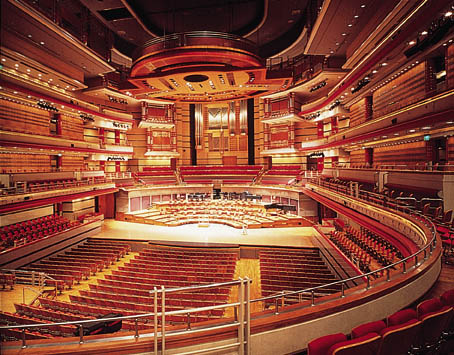
Modern room design began as a desperate attempt to fix a noisy lecture hall. A physicist discovered that the secret to clear sound isn't just the architecture, but how fast sound decays after you stop speaking.
In the late 1890s, Wallace Sabine was tasked with solving an echoing hall at Harvard that made speech nearly impossible to understand. By experimenting with seat cushions and heavy curtains, he unlocked the mathematical relationship between room volume and echo duration. This breakthrough allowed him to design Boston Symphony Hall, which remains one of the world's most acoustically perfect spaces. Every theater today relies on his simple formula to ensure audiences hear music exactly as intended.
Source: Architectural acoustics